

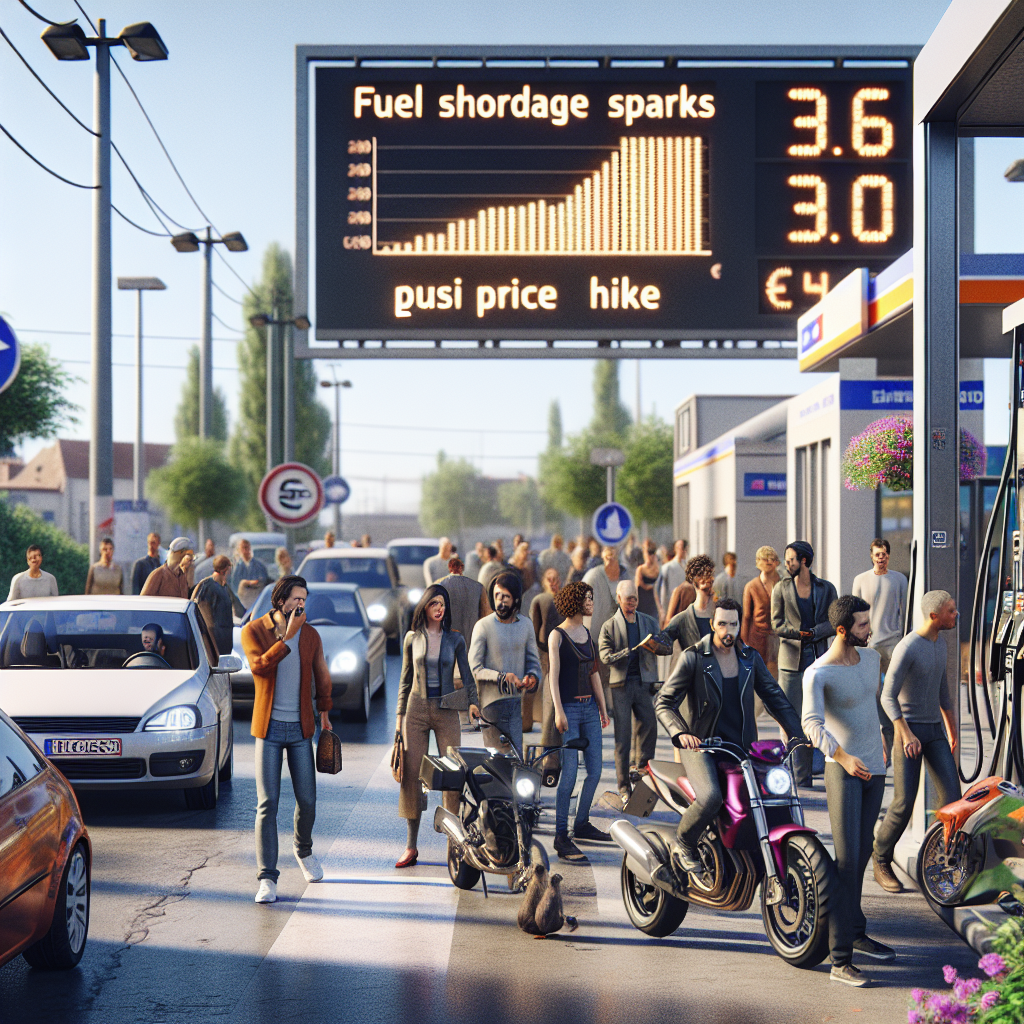
Fuel Shortages at French Stations Amid TotalEnergies Price Cap
The energy company TotalEnergies has faced significant scrutiny this week as reports indicate that approximately 18% of petrol stations across France are experiencing fuel shortages. This alarming development was highlighted by State Secretary for Energy, Maud Bregeon, during a recent interview with BFM TV.
Bregeon explained that the shortages stem from the company’s recent pricing strategy, which has instituted maximum prices that fall below those of its competitors. This decision has inadvertently led to an increased demand at individual stations, resulting in localized supply challenges. “This is not a widespread supply issue,” Bregeon clarified, emphasizing that logistical hurdles—rather than a genuine lack of fuel—are to blame for the current situation.
TotalEnergies introduced a price cap of €1.99 per liter for petrol and approximately €2.09 for diesel in an effort to shield customers from the global oil price shock stemming from the ongoing conflict in the Middle East. This measure was first enacted at the company’s 3,300 filling stations on March 13 and was subsequently extended through early April.
Government observations noted that as of April 1, around 700 out of 900 stations reported running low on various fuel types from TotalEnergies, although the government initially assessed the overall shortage at under 10% of the country’s filling stations.
To alleviate the economic impact of rising fuel prices, French authorities unveiled a support package aimed at various sectors. This initiative includes €50 million in fuel assistance for small and medium enterprises, alongside €5 million earmarked for the fishing industry and €14 million for agriculture.
Currently, France maintains a strategic oil reserve of about 100 million barrels, with commitments through the International Energy Agency to release up to 400 million barrels. However, the country has not yet tapped into its 14.5 million-barrel commitment.
As for Norway, fuel supply remains stable, with no immediate concerns reported. Industry Manager Einar Gotaas commented that 75-80% of the fuel for transport in Norway is imported, but due to the absence of a price cap—as seen in France—Norwegian consumers are less likely to hoard fuel under current conditions.
The pricing in Norway is determined by a range of factors including purchase cost, taxes, and local competition, ensuring a more balanced supply dynamic. As the global situation continues to evolve, Norway has the capacity to increase imports from various countries and maintain emergency stocks that cover around 20 days of consumption.
In light of the fuel crisis, Norwegian authorities have also introduced a temporary tax reduction on fuels from April 1 until September 1, further easing the financial burden on consumers during this turbulent period.
