

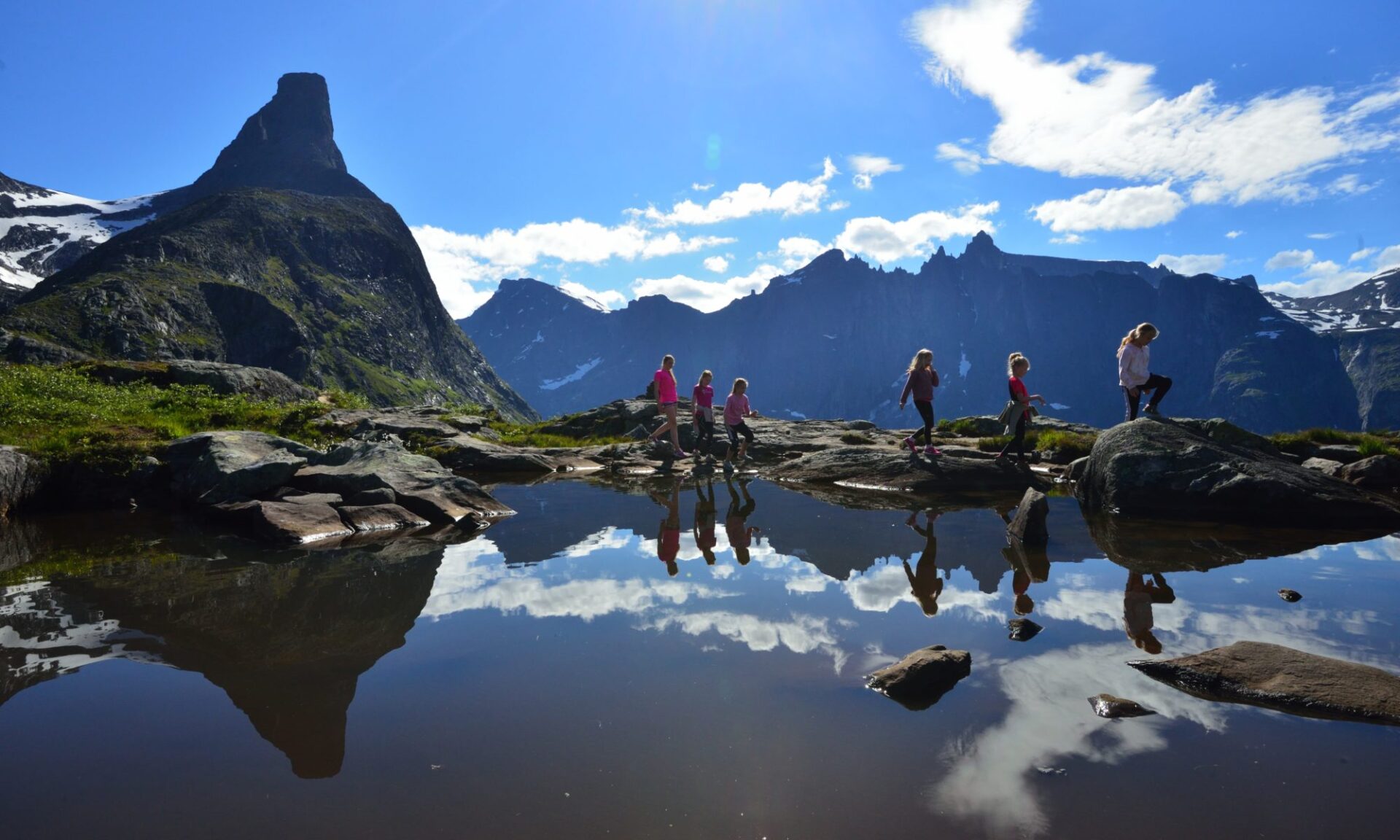
When envisioning Norway, one cannot overlook the fjords. These stunning inlets, shaped by glaciers over eons, carve into the very fabric of the coastline, offering some of the most breathtaking panoramas in Europe. Picture towering mountains, cascading waterfalls, quaint villages nestled by the water’s edge, and serpentine roads winding along sheer cliffs—all of these elements unite to make Norway’s fjords a must-see for any traveler.
With over 1,000 fjords dotting the landscape, the difficulty doesn’t lie in finding one; rather, it’s in choosing which ones merit your precious time. This guide will introduce you to both the iconic gems—like Geirangerfjord and Nærøyfjord—and the lesser-known wonders scattered throughout Arctic Norway. We’ll also provide practical tips on how to visit these majestic landscapes and where to find cozy accommodations nearby.
Norway’s Iconic Fjords
First-time visitors to Norway will undoubtedly recognize these fjords from travel brochures, postcards, and social media feeds. Their popularity is well-deserved, boasting dramatic scenery and viewpoints that etch unforgettable memories into the minds of all who visit.
1. Geirangerfjord
Geirangerfjord holds an unparalleled reputation as Norway’s most famous fjord. Its awe-inspiring vistas have even inspired scenes in Disney’s Frozen, while its surrounding mountains formed the dramatic backdrop of the disaster film The Wave (Bølgen). Today, Geirangerfjord is among the country’s most popular natural destinations.
Together with Nærøyfjord, located about 120 kilometers away, this fjord is part of a UNESCO World Heritage Site, showcasing the quintessential fjord landscape.
Nestled in the Møre og Romsdal region, Geirangerfjord is easily accessible from Ålesund, just a two-and-a-half-hour drive away. Along its shores, you’ll find dramatic peaks rising steeply from the water and several spectacular waterfalls, including the breathtaking Seven Sisters—though astonishingly, this waterfall doesn’t even rank among Norway’s top 40 in height.
However, this picturesque setting faces a looming threat; a major section of the Åknes mountain, nearby, is becoming increasingly unstable. Geologists caution that a collapse into the fjord could trigger a tsunami, endangering nearby communities, including Geiranger village. Fortunately, the mountain is under careful surveillance, and authorities expect to provide ample warning for evacuation, should it be necessary.
We advise you to visit soon—before the fjord’s character is irrevocably altered!
Getting There
Summer offers the best opportunities to experience Geirangerfjord, as boat trips and hiking trails flourish during this season. One of the most memorable ways to explore this UNESCO-listed site is through a sightseeing cruise that glides past famous waterfalls, abandoned cliffside farms, and some of Norway’s most striking landscapes.
Where to Stay
For accommodation, the Grande Fjord Hotel is conveniently located just over a mile from Geiranger village, featuring clean and stylish rooms, some with balconies overlooking the fjord. Alternatively, the Geirangerfjorden Feriesenter offers compact self-catering units with breathtaking views.
2. Sognefjord
Stretching over 200 kilometers and plunging to depths exceeding 1,300 meters, Sognefjord is both the longest and the deepest fjord in Norway. Rather than a singular attraction, it embodies an entire region replete with mountains, picturesque villages, and winding waterways that reward adventurous travelers.
You can spend days exploring charming villages, hiking in Jotunheimen National Park at the fjord’s eastern edge, or visiting historical sites like the stave church at Kaupanger. The village of Balestrand, with its grand historic hotels and beautiful waterfront, is especially charming and serves as an excellent base for discovery. From here, you can embark on guided excursions to nearby Fjærland, blending spectacular fjord views with glimpses of the Jostedalsbreen glacier—the largest glacier in mainland Europe—complete with opportunities for guided glacier hikes.
Many visitors catch a slice of the fjord via the renowned Sognefjord or Norway in a Nutshell tour, which incorporates scenic train journeys, boat cruises, and some of Western Norway’s most stunning landscapes. Be sure to allocate sufficient time; distances can be deceptive, and there’s much more to unfold than meets the eye.
Getting There
From Bergen, Sognefjord is most accessible by car, taking about four hours to reach Sogndal.
Where to Stay
The Lavik Fjord Hotell is a luxurious option, with some modern rooms offering stunning views and excellent hiking trails nearby. For a more budget-friendly alternative, Botnen Camping provides affordable bunk rooms and simple cabins.
3. Nærøyfjord
Nærøyfjord, part of the Sognefjord system, joins Geirangerfjord as part of a UNESCO World Heritage Site. Although it extends for just 17 kilometers, it can be strikingly narrow—at some points only a couple of hundred meters across. Surrounded by mountains towering over a kilometer above the waterline, this area constitutes one of the most dramatic destinations in all of Western Norway.
Rain or shine, this exquisite locale is perfect for photography, picnicking, or simply marveling at nature’s artistry. For the more adventurous, it’s an excellent spot for kayaking; a full-day guided kayak trip from Voss provides the ideal vantage point to appreciate the fjord’s waterfalls and formidable mountains.
Getting There
A popular day trip from Bergen, Nærøyfjord is best experienced through a guided tour that combines a cruise on the fjord with a visit to the Viking Village and a ride on the famous Flåm Railway—three of Western Norway’s most significant highlights, all within a single day.
You can also self-navigate by renting a car; it’s approximately a two-hour and fifteen-minute drive from Bergen to Gudvangen, located at Nærøyfjord’s southern tip.
Where to Stay
For lodging, consider the Gudvangen Fjordtell, a comfortable upscale option located in the village of Gudvangen right at Nærøyfjord’s southern tip. For budget-conscious travelers, the simpler Gudvangen Budget Hotel offers good value.
4. Aurlandsfjord
A remarkable offshoot of Sognefjord, Aurlandsfjord is renowned for being one of Norway’s narrowest and most breathtaking fjords. At its southern end lies Flam, the starting point for one of Norway’s—and indeed the world’s—most scenic railway journeys.
To truly appreciate the Aurlandsfjord, a visit to the stunning Stegastein viewpoint, which juts 650 meters above the water, is a must. We particularly love a guided tour from Flåm that includes this striking viewpoint, showcasing some of the finest scenery around Aurlandsfjord.
Getting There
The most enjoyable way to reach Aurlandsfjord is by taking the Flamsbana railway to Flam. For more details on the journey, be sure to check our guide on the Bergen to Flam railway. This day trip from Bergen includes a journey on the Flamsbana and a boat cruise on the Aurlandsfjord.
Where to Stay
In Flam, the Flåm Hostel offers budget-friendly rooms close to the waterfront. Alternatively, the more upscale Flåmsbrygga Hotel is situated near the train station, providing stunning views of the fjord, or consider the charming Heimly Pensjonat, set in delightful gardens overlooking the water.
5. Hardangerfjord
As Norway’s second-longest fjord, Hardangerfjord opens to the North Sea, about 80 kilometers south of Bergen, before stretching inland toward the Hardangervidda National Park.
The fjord’s eastern end features Odda, an ideal base for hiking and outdoor pursuits in the surrounding Hardangerfjord region. This area also serves as the main gateway to Trolltunga, the iconic rock formation that lures thousands of hikers each summer, offering some of Norway’s most breathtaking views. From Odda, several guided tours showcase both Trolltunga and the fjord’s beauty. For more information on Odda, check out our guide on local attractions.
Getting There
Reaching Odda requires around four hours of driving from Stavanger, three hours from Bergen, or two hours from Haugesund. Long-distance buses from Bergen, Oslo, and other cities, operated by Vy and regional providers, also service Odda.
Where to Stay
For a more budget-friendly option, Trolltunga Camping offers practical accommodation, whereas the Trolltunga Hotel features simple but comfortable rooms in Odda, some overlooking a tranquil lake.
6. Lysefjord
At the heart of Lysefjord, the famous Preikestolen, or ‘Pulpit Rock,’ rises 604 meters above the water, attracting around 300,000 visitors annually—even Tom Cruise made a pit stop here while filming for Mission Impossible 6. If you’re keen to experience your own moment of glory, guided tours from Stavanger offer transportation and a knowledgeable guide to lead you on the 4-6 hour ascent to the iconic summit. More information can be found in our hiking guide.
But it’s not just the rock that captivates visitors to Lysefjord; the area boasts many hiking trails and even one of the world’s longest wooden staircases, the Flørli 4444, complete with—surprise—4,444 steps.
Kjerag, another highlight, features a massive boulder suspended between towering cliffs. Join a guided tour to tackle Kjerag, where you can snap the now-famous photo standing on the boulder—if you dare!
Getting There
Winter access to Lysebotn is primarily by ferry; in summer, travelers can navigate via 27 hairpin turns known as Lysebotnvegen. By boat, the fjord is about an hour from Stavanger. If driving, take the car ferry to Lysebotn, the launch point for the Kjerag hike.
Where to Stay
The picturesque village of Lysebotn offers a serene place for several nights. During the summer months (May–October), the Lysefjorden Turisthytte provides simple accommodations, ideally situated for touring the local area. Alternatively, the Flørli 4444 Hostel is located at the foot of the Flørli stairs and is accessible only by boat, boasting a variety of lodging options, including fjordfront apartments, dorms, and camping.,
The Dramatic Fjords of Western Norway
Western Norway stands as the very heart of fjord country. Beyond the marquee attractions, quieter waterways, hidden valleys, and mountainous landscapes abound, rivaling even the most famed destinations.
7. Hjørundfjord
Hjørundfjord, a deep and narrow fjord stretching 35 kilometers, remains largely unvisited, its shadowy waters framed by imposing mountains that plummet directly into the fjord. As a branch of the Storfjord, it lies south of Ålesund, surrounded by the picturesque Sunnmøre Alps, some peaks soaring to 1,500 meters above sea level.
Only a handful of settlements cling to its shores, as the steep terrain complicates construction. Visitors flock here for its peaceful isolation and beautiful mountain trails. The hike from the charming village of Øye up Mount Slogen is demanding but rewards your efforts with breathtaking views of the fjord.
For those who prefer a more leisurely pace, a round-trip fjord cruise from Ålesund reveals steep mountainsides, quaint villages, and some of the most stunning landscapes in the Sunnmøre Alps.
Getting There
Traveling from Ålesund to Sæbø takes about two-and-a-half hours, including a ferry ride across the Storfjord. Alternatively, Hurtigruten boats service Hjørundfjord for those looking to explore this remarkable waterway.
Where to Stay
You can find comfort at the Sagafjord Hotel in Sæbø, which sits right on the waterfront, or indulge in the historic—albeit reputedly haunted—Hotel Union in the quaint village of Øye.
8. Nordfjord
Nordfjord is another breathtaking gem nestled in the Sogn og Fjordane region of Western Norway. Besides stunning vistas, it promises proximity to the Jostedalsbreen glacier and the Loen Skylift, which ascends 1,000 meters to Mt. Hoven in just five minutes.
If you prefer to take it slow and truly immerse yourself in the scenery, a beginner-friendly kayak tour provides a fantastic way to explore Nordfjord’s mountains and serene waters amidst unspoiled landscapes.
Getting There
Nordfjordeid, located at the fjord’s eastern end, serves as the best base for exploration, situated just a three-hour drive from Ålesund. Alternatively, you can reach Nordfjordeid via bus from Oslo or express boat from Bergen.
Where to Stay
For accommodations, the upscale Nordfjord Hotel in Nordfjordeid offers comfortable rooms alongside a pool and spa, while Sentrum Hotel provides a more economical option with basic yet pleasant rooms.
9. Romsdalsfjord
The Romsdalsfjord, Norway’s ninth longest fjord, is enveloped by towering snow-capped peaks in the winter and vibrant wildflower-filled fields during spring. Uncharacteristically for Norwegian fjords, it’s dotted with several islands, and its pristine waters teem with marine life, making it popular for fishing.
Isfjorden lies at the fjord’s eastern tip, while the larger town of Åndalsnes graces its southern shores, serving as an excellent base for excursions along the exhilarating Trollstigen, Norway’s dramatic mountain road featuring 11 hairpin bends.
For those not inclined to drive, guided tours offer a stress-free alternative, with seasoned drivers handling the twists and turns.
Getting There
Åndalsnes is best accessed by train via the scenic Rauma line, which connects regularly to Oslo and Trondheim. Additionally, frequent buses to Molde and Ålesund service the area.
Where to Stay
In the heart of Åndalsnes, the Grand Hotel offers elegant accommodations alongside beautiful views of the lake and mountains. For those on a budget, Romsdalseggen Camping in nearby Isfjorden is a more affordable option.
10. Sunnylvsfjord
Often overshadowed by its more famous neighbor, Geirangerfjord, Sunnylvsfjord remains an unassuming treasure, overlooked by travelers eager to witness the more popular site. This expansive fjord, however, possesses the same dramatic landscapes without the crowds.
Sheer mountains rise dauntingly from the water, waterfalls cascade down rugged cliffs, and ferries gracefully navigate between quaint settlements scattered along the shoreline. If you’re traveling towards Geiranger, you may inadvertently pass through the stunning Sunnylvsfjord without even realizing it.
Getting There
Located just south of Geirangerfjord in the Sunnmøre region, Sunnylvsfjord is conveniently reached by car from either Ålesund or Geiranger.
Where to Stay
A great base for exploring is the waterfront Havila Hotel Geiranger, or consider a peaceful stay at Lunheim Accommodation situated in Hellesylt at the mouth of the fjord.
11. Tafjord
Located at the end of a narrow branch of the Storfjord, Tafjord remains one of Western Norway’s hidden gems. Its stunning scenery features steep mountains, rushing waterfalls, and winding roads leading into a remote landscape that feels blissfully detached from tourist routes.
This fjord is also steeped in a tragic chapter of Norwegian history; in 1934, a rockslide into Tafjord triggered a tsunami that devastated several villages and claimed 40 lives. The disaster spurred the development of modern monitoring systems for unstable mountains and landslide risks.
Today, visitors explore Tafjord for its hiking opportunities, fishing, and the serene withdrawal it offers rather than its past turmoil.
Getting There
Reaching Tafjord takes approximately two hours by car from Ålesund, traveling through Valldal and Norddal.
Where to Stay
Most visitors choose to stay in Valldal, which offers accommodations like the comfortable Valldal Fjordhotell, featuring modern rooms with fjord views. Alternatively, Valldal Camping provides cabins and apartments at budget-friendly rates.
Norway’s Wild Arctic Fjords
In the Arctic Circle, fjords take on a rugged and untamed character. Expect jagged cliffs, remote fishing villages, the enchanting northern lights, and some of the country’s most dramatic coastal vistas.
12. Trollfjord
Nestled in the Arctic, Trollfjord is one of Northern Norway’s best-kept secrets. This 2-kilometer fjord, hidden between the Vesterålen and Lofoten Islands, features a narrow channel that opens into a remarkably scenic oval bay.
Surrounded by sheer cliffs, the fjord often takes on a monochrome palette due to the dark rocks and thick snow clinging to them; its waters appear inky black. Occasionally, you might even catch sight of eagles soaring overhead, enhancing the fjord’s otherworldly aura. The tallest peak here, Mt. Trolltind, rises 1,084 meters above sea level.
Getting There
Trollfjord can be explored via a Hurtigruten cruise or a boat trip departing from Svolvær in the Lofoten Islands.
Many tours set off from Svolvær; for a tranquil experience, we recommend a silent electric cruise through the fjord, offering intimate views of the dramatic mountains and local wildlife. For a touch of adventure, consider a RIB safari that delves deeper into the fjord in search of seals and eagles.
Where to Stay
This wilderness region offers minimal accommodations outside of a simple hut managed by the Norwegian tourist authority. For more comfort, consider staying at the Scandic Svolvær Hotel on a picturesque island in the harbor.
13. Lyngenfjord
Located in the Lyngen Alps near Tromsø, Lyngenfjord stretches an impressive 82 kilometers, making it one of the prominent fjords in Northern Norway, particularly desirable for northern lights enthusiasts.
The high peaks of the Lyngen Alps cast a rain shadow, enhancing the likelihood of clear skies, making this an ideal location for observing the northern lights. The village of Lyngseidet, nestled on the fjord, houses the world’s northernmost whisky distillery.
Getting There
Travel to Lyngseidet can be accomplished by car or bus from Tromsø.
Where to Stay
The welcoming Magic Mountain Lodge in Lyngseidet offers rooms with fjord views, dormitories, and shared kitchen facilities, alongside a relaxing sauna for guests.
14. Vestfjord
For those seeking a tranquil escape, Vestfjord—whose name translates to “West fjord”—is an ideal choice. Spanning nearly 100 miles, it flows between the Lofoten Islands and the mainland of Northwestern Norway.
At its southern end, where it meets the sea, Vestfjord is about 50 miles wide, making it one of the largest fjords in the region. Several smaller fjords branch off it, such as Ofotfjorden and Tysefjorden, with the quaint Nusfjord to the west.
Getting There
The northern end of Vestfjord is best accessed from Narvik, home to Norway’s northernmost train station. Narvik is reachable via the Ofotbanen, also known as the Arctic Railway, connecting Kiruna in Sweden.
Where to Stay
The Bogen Hostel has basic accommodations, alongside a caravan providing lovely views of the Ofotfjorden.
15. Ofotfjord
While many travelers pass through Narvik en route to the Lofoten Islands, few take the time to explore Ofotfjord. This rugged fjord stretches inland, flanked by intimidating mountains that remain snow-capped for much of the year.
Rich in history, Ofotfjord witnessed fierce naval confrontations during World War II, as German and Allied forces clashed over control of Narvik and its strategically vital iron ore railway.
Nowadays, Ofotfjord is a haven for hiking, photography, and scenic journeys on the breathtaking Ofoten Line, connecting Narvik with Kiruna in Sweden.
Getting There
Narvik, located on the fjord’s northern shore, can be reached by train from Sweden or through domestic flights originating from Oslo and other major Norwegian cities.
Where to Stay
The Scandic Narvik boasts modern accommodations with spectacular views of the fjord, or you can opt for Breidablikk Guesthouse for a more affordable stay.
16. Reinefjord
Chances are, if you’ve seen a postcard from the Lofoten Islands, it featured Reinefjord. Enveloped by jagged peaks and overshadowed by the iconic fishing village of Reine, this narrow fjord is among Norway’s most photographed landscapes.
For the most breathtaking views, the acclaimed Reinebringen hike ascends steeply from the village, rewarding hikers with stunning panoramas of islands, mountains, and vibrant blue waters. For a truly unforgettable experience, consider joining a midnight sun kayaking tour, gliding across the calm waters of Reinefjord beneath the endless summer daylight of Northern Norway.
Despite its popularity, Reinefjord maintains a sense of wild charm, particularly outside the bustling summer season.
Getting There
Reine is located about two hours south of Svolvær by car, accessible via the E10 highway traversing the Lofoten Islands.
Where to Stay
For an authentic experience, consider staying in traditional fishermen’s cabins at Andøy Vest Rorbuer in Reine, providing a unique waterfront retreat.
Beyond the Classic Fjord Route
Not every remarkable fjord is located along Norway’s main tourist trail. The following fjords promise diverse experiences, from Arctic wilderness and wildlife encounters to escapes into history.
17. Vistenfjord
While the southern fjords draw substantial crowds thanks to their breathtaking beauty, Vistenfjord remains a quieter gem at just 22 kilometers in length—affectionately dubbed “the unknown fjord.”
Nestled between the Vega Islands and the Seven Sisters mountains, Vistenfjord extends into the remote Lomsdal-Visten National Park. Ideal for hiking and kayaking, its serene environment is surrounded by ancient farming communities and marked by rich biodiversity.
Getting There
Regular express boats from Tjøtta or Forvik navigate along the Innervisten to Aursletta and Bønå, at the head of Vistfjorden.
Where to Stay
A charming cottage in Vevelstad, overlooking the water, provides a lovely base for exploring Vistenfjord.
18. Trondheimsfjord
Situated conveniently near the city of Trondheim, Trondheimsfjord ranks among Norway’s most accessible fjords. Stretching from the Norwegian Sea to Levanger, around 50 kilometers northeast, this fjord boasts vast skies, abundant birdlife, rolling hills, and shimmering blue waters.
Getting There
Trondheimsfjord runs alongside Trondheim, making it easily reachable. Various ferries and boat tours operate in summer, leading you to Ytterøy or the historic prison island and fortress at Munkholmen.
Where to Stay
Trondheim offers affordable bed and breakfasts, apartments, and numerous hotels. The Rumi Hostel, featuring dormitory and twin rooms, is a smart choice for budget travelers.
19. Oslofjord
If you find yourself in Norway for a few days and wish to experience at least one fjord, Oslofjord has you covered. While it may not rival the dramatic fjords of the west, it still offers lovely islands and beaches, making summer visits worthwhile.
One of the easiest options for exploration is an eco-friendly guided tour aboard a hybrid electric boat that includes brunch and a glass of bubbly as you glide silently across the fjord. Alternatively, consider joining a guided hike that leads to the most scenic vistas of the city and the surrounding areas from Vettakollen mountain.
Alternatively, explore the fortress island of Oscarsborg, the historic monastery on Hovedøya, or the museums on Bygdøy Peninsula. For additional information about uncovering the Oslofjord’s charms, refer to our guide.
Getting There
Ferries and boat trips depart daily from Aker Brygge harbor, while other ferries connect Norway to Denmark through the Oslofjord and Skagerrak/Kattegat. For budget travel around Oslofjord, check our guide.
Where to Stay
Oslo’s hotels can be quite expensive. If you’re looking for a more budget-friendly alternative, check out great hostels or consider booking one of the many unique Airbnbs.
20. Isfjord (Svalbard)
Now we’re venturing truly off the beaten path. Situated over 800 kilometers north of mainland Norway, the untamed and icy Svalbard archipelago rests within the Arctic Circle. The dramatic Isfjord wraps around the main island, Spitsbergen, stretching approximately 100 kilometers.
Although side fjords in this region often freeze over during winter, Isfjord itself usually remains ice-free, thanks to the Gulf Stream. With two national parks lining its coasts, this area is a haven for diverse birdlife, while also serving as a prime location for wildlife spotting.
Encounter Arctic foxes, reindeer, and polar bears on land, while whales, seals, and walruses abound in the waters. This locale also offers breathtaking views of the northern lights.
Longyearbyen, the island capital, lies on the fjord’s southern side, where numerous tours leave to explore both Isfjord and its captivating wilderness. For additional insights into Svalbard’s attractions, consider our guide to the historic coal mine tour.
Getting There
The simplest route to Svalbard is to fly with Norwegian from Oslo.
Where to Stay
Most accommodations in Svalbard are found in Longyearbyen; for simple but affordable options, the Gjestehuset 102 hostel offers decent rooms, while the pricier Svalbard Hotell Polfareren combines boutique comfort with stunning surroundings.
FAQ
Where Are the Best Fjords in Norway?
Because fjords can be challenging to reach, visiting all 20 of the highlighted locations would require significant travel time. If we must choose one area to explore, we recommend the region surrounding Bergen.
From Norway’s second-largest city, you can readily visit two of our favorite fjords—Nærøyfjord and Aurlandsfjord—on day trips using boats, or opt to take the ferry and return via Norway’s most scenic mountain railway.
Why Does Norway Have So Many Fjords?
Fjords are U-shaped valleys carved by glaciers over millions of years. Glaciers formed below sea level, and due to Norway’s extensive coastline and its cold climate, countless fjords arose along its shores.
Are Fjords Only Found in Norway?
Not at all. Countries such as New Zealand, Chile, Canada, and Greenland also boast fjords. However, the association with Norway stems from the term “fjord,” a Norwegian word originating from the Vikings, which has since been adopted globally to describe these stunning glacial formations.
How Deep Are Norway’s Fjords?
Fjord depths vary significantly. In general, however, they plunge quite deep! Sognefjord is Norway’s deepest fjord, reaching up to 1.3 kilometers at its lowest point.
When Is the Best Time to Visit the Norwegian Fjords?
Summer marks peak season in the fjords. From June to early September, you’ll enjoy long hours of daylight, mild weather, and a greater chance of sunshine—perfect for outdoor activities like hiking, white-water rafting, and kayaking. However, this is also when the fjords are most crowded, and accommodation prices soar. For fewer crowds, consider visiting in autumn or winter.
Autumn’s beauty, featuring vibrant foliage in shades of orange, brown, and gold, can be mesmerizing, while winter enchants with snow-capped peaks and a tranquil atmosphere. Outdoor activities such as snowshoeing become possible, and the opportunity to witness the northern lights is compelling. Just remember to check road conditions before setting out, as some routes may become inaccessible due to snow.
Which Norwegian Fjord Will You Visit First?
From the world-renowned Geirangerfjord and Nærøyfjord to the remote Arctic wonders like Isfjord and Vistenfjord, Norway encompasses a stunning array of fjord landscapes. Whether you’re crafting a scenic road trip, embarking on a thrilling hiking adventure, or exploring the far north, there’s a perfect fjord waiting for every kind of traveler.
Have you journeyed to any of the fjords mentioned, or do you have a personal favorite we should include? Share your experiences with us in the comments—we’d love to hear about your own fjord discoveries in Norway.
Don’t Forget Travel Insurance
Your visit to Norway’s mesmerizing fjords deserves proper protection, so be sure to secure suitable travel insurance. While Norway is generally safe for travelers, having coverage can be invaluable in case of lost belongings or unforeseen accidents.
World Nomads provides travel insurance options for travelers in over 100 countries. As an affiliate, we may receive a commission if you obtain a quote through our link. Please note that this information serves only as a guide, and we do not specifically endorse World Nomads.
See also:
Where to Stay to Explore the Fjords
Eco-Friendly Places to Stay in Norway
The Best Places to Stay in Norway
