

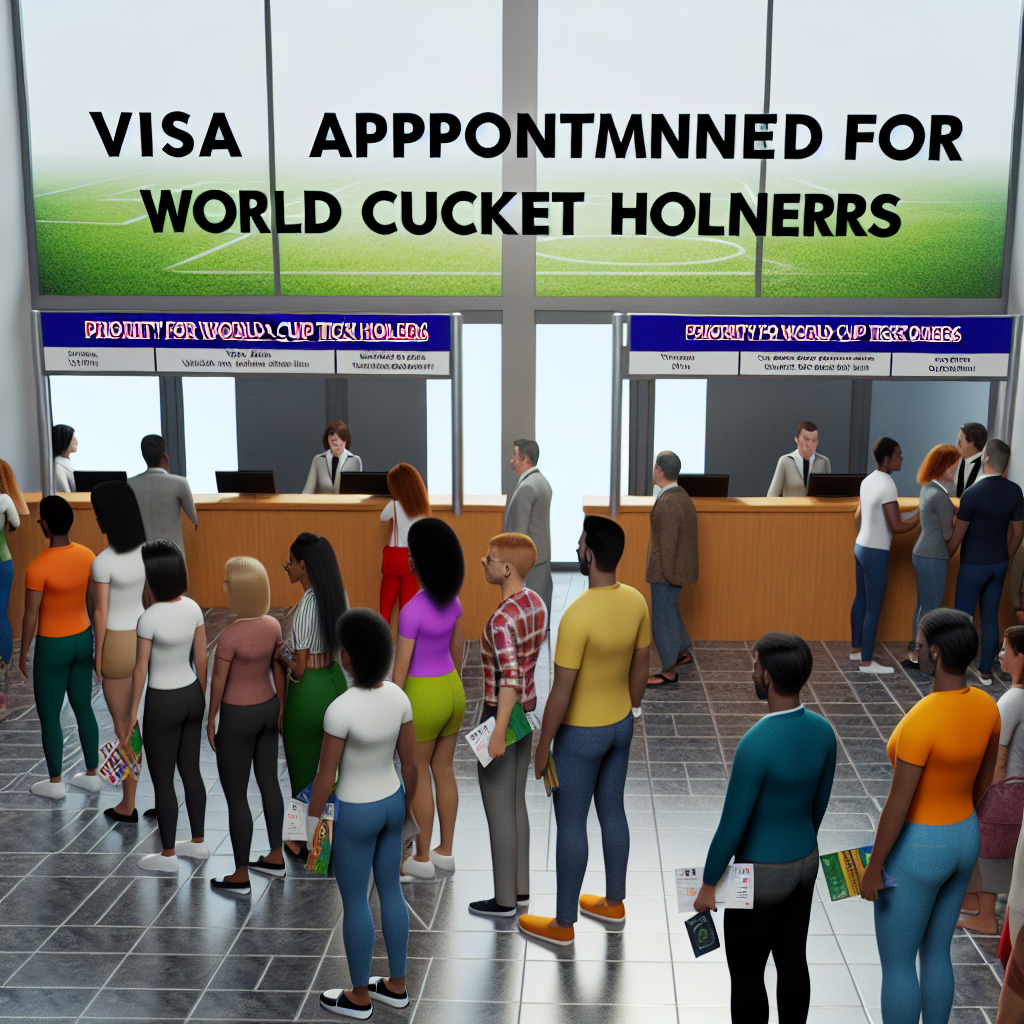
New Visa Priority System for 2026 World Cup Announced by Trump
In a bold announcement from the White House, President Donald Trump revealed that US embassies will prioritize visa appointments for travelers holding tickets to the 2026 World Cup. This initiative, known as the FIFA Prioritized Appointment Scheduling System (PASS), aims to provide ticket-holders facing extensive wait times with the opportunity for expedited visa interviews.
“World Cup ticket-holders who are experiencing long delays will now have the option to schedule an expedited interview in coordination with FIFA,” Trump stated during the announcement.
Set to take place next June and July across the United States, Canada, and Mexico, the tournament promises to draw millions of fans. However, it’s important to note that possessing a ticket does not automatically guarantee a visa, as Secretary of State Marco Rubio emphasized.
“While we are expediting the process, it’s essential to understand that your ticket is not a visa,” Rubio said alongside Trump. “We will conduct the same vetting procedures as we do for all applicants; the only distinction here is the expedited queue.”
The 2026 men’s World Cup will be predominantly hosted in the United States, a fact that FIFA President Gianni Infantino highlighted during the announcement. Infantino projected that the event could attract as many as 10 million visitors to the country.
“This FIFA Pass will ensure that legitimate football fans can attend the World Cup under favorable conditions, starting with acquiring their visas,” he remarked.
As the tournament approaches, some countries whose national teams have already secured spots are facing significant visa appointment delays. For example, Colombian travelers are currently experiencing wait times of approximately 11 months for US visa interviews, according to US State Department data. Similarly, applicants in Mexico City face an average wait of nine and a half months, while non-Canadian residents in Toronto can expect up to 14 months.
If these delays persist, it’s conceivable that the World Cup could conclude and the trophy awarded before many fans from these nations are issued their visa decisions.
The U.S. Travel Association, a key player in the tourism industry, welcomed the announcement. “The expedited process for FIFA ticket-holders introduces efficiency without compromising security,” stated CEO Geoff Freeman. “This type of practical initiative enhances security, increases capacity, and reduces wait times, positioning the US to welcome millions of visitors next year.”
However, uncertainties remain regarding whether the new priority system will apply to ticket-holders from countries with travel restrictions to the US. In June, Trump signed an executive order barring nationals from 12 countries, citing security concerns. Iran, whose football team qualified for the World Cup, is included in this list. While athletes and coaching staff associated with the tournament are exempt, fans may still face travel bans.
The BBC has reached out to the US State Department for further clarification on this issue.
Importantly, not all travelers to the US will require a visa next year. Citizens from countries participating in the US visa waiver program can generally travel without a visa for up to 90 days. This program includes many European nations, as well as Japan and Australia.
At recent World Cups in Russia and Qatar, a ticket to a match provided fans with a fan ID, effectively functioning as a visa for entry into the host country. As anticipation builds for the 2026 tournament, the effectiveness of the new visa system will be closely scrutinized.
