

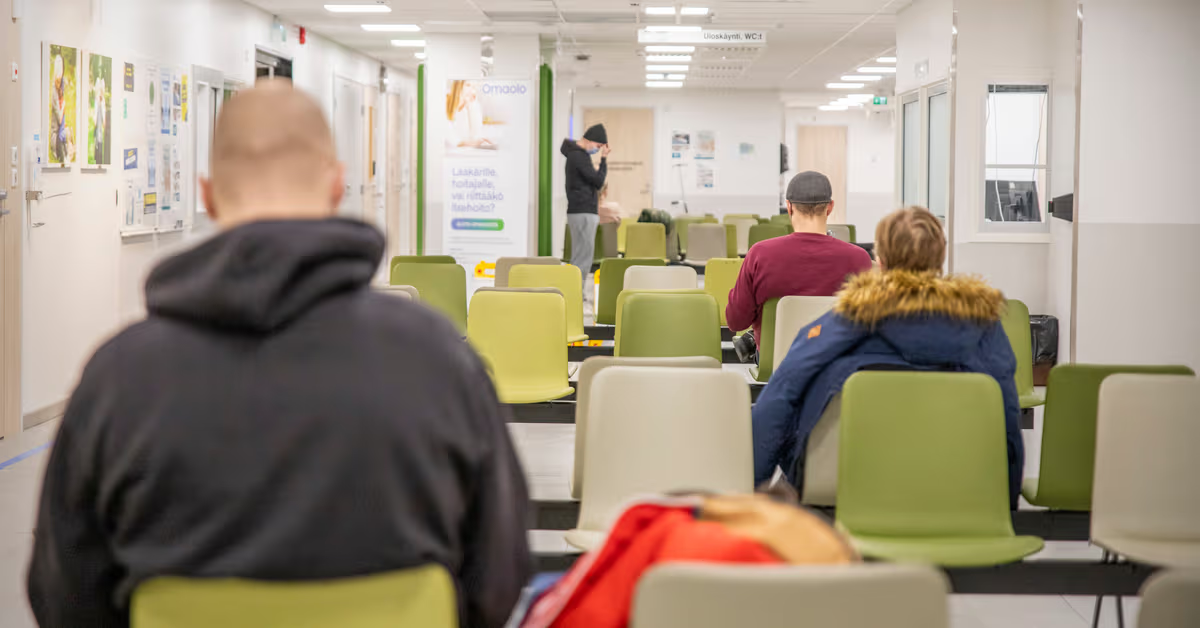
Access to Primary Healthcare Deteriorates Amid Improved Specialized Care
In a troubling turn of events, the Finnish Institute for Health and Welfare (THL) has reported a significant decline in access to primary healthcare, particularly affecting young people. Sara Launio, the agency’s chief physician, expressed her grave concern, noting that this development serves as a warning signal for the healthcare system.
Last year, many patients found themselves facing longer waiting times to access primary care. In contrast, the institute highlighted a significant improvement in specialized healthcare, where waiting queues decreased notably—an achievement Launio described as “important” during a press release on Wednesday.
However, this positive trend in specialized care coexists with challenges in primary healthcare access. Notably, under Prime Minister Petteri Orpo’s government, the maximum statutory waiting time for non-urgent primary healthcare was extended from 14 days back to three months, a reversal of the previous government’s decision to shorten it to 14 days.
The data presents a stark picture: only 59 percent of adults were able to see a doctor within the two-week timeframe last year. Alarmingly, the legal requirement mandating treatment access within 14 days for those under 23 was not met, revealing a systemic gap. THL reported that only 71 percent of patients under 23 were seen in this period in December 2025.
Progress in Specialized Care
On a more optimistic note, the agency has observed a reduction in waiting times for specialized healthcare, describing it as a “clearly positive” development. The proportion of patients awaiting treatment for more than 180 days fell from 14.7 percent to 12.7 percent over the year, with nearly 8,000 fewer patients on waitlists.
These improvements have been distributed across most well-being service counties, though regional disparities remain notable. THL also noted that among patients requiring critical procedures, such as coronary angioplasties, very few experienced delays—in fact, only 35 out of over 3,000 patients waited beyond three months, and none faced delays exceeding six months.
Launio emphasized that the challenges posed by the Covid-19 pandemic have largely been surmounted, allowing the healthcare system to prioritize urgent cases effectively. “Access to care for critical procedures demonstrates the system’s capability to prioritize the most urgent needs,” she stated.
As the healthcare landscape evolves, it remains clear that while strides have been made in specialized treatment, urgent reforms are essential to restore timely access to primary care for all, especially the youth.
