

Danish Support for Ukraine Amid Controversial Bill
In the ongoing conflict between Ukraine and Russia, the issue of supporting Ukraine’s military efforts takes on new dimensions, particularly as a proposed bill in Denmark faces scrutiny. Several blue parties are backing this legislation, which aims to discourage Ukrainian men from seeking refuge in Denmark during the war.
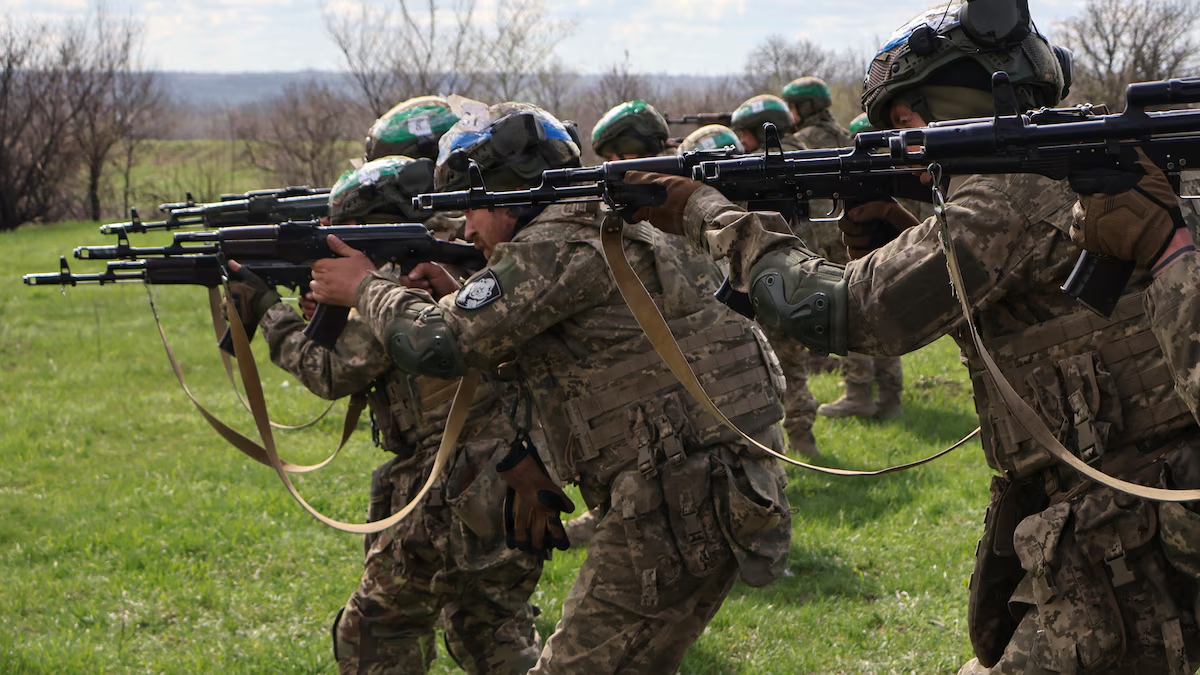
Dennis Flydtkjær, the immigration spokesperson for the Danish Democrats, asserts, “When Denmark is investing significantly in military aid and conducting exercises with Ukraine, it only follows that we encourage Ukrainians to remain in their homeland and defend it.”
When the Danish government introduced this bill in June, Immigration and Integration Minister Morten Bødskov emphasized its vital necessity. “We must amend the special legislation to ensure that our asylum policies do not inadvertently weaken Ukraine’s defense capabilities,” he stated to DR Nyheder. Bødskov firmly believes that those who are able to fight should contribute to the struggle against Putin’s aggression.
The Conservative Party echoes this sentiment. Defense spokesman Marcus Knuth insists that the bill reflects close collaboration with the Ukrainian government, which has urged all EU nations to assist in military recruitment efforts. “It would be contradictory for us to enhance our defense capabilities in Denmark while simultaneously inviting Ukrainian men to evade their military service by seeking residence here,” he remarked.
A Divided Response
However, the proposal has met with resistance from the government’s own support party, Enhedslisten. Peder Hvelplund, the party’s immigration and integration rapporteur, articulated a contrasting viewpoint. “We do not believe it is the Danish state’s responsibility to compel Ukrainian men into combat. The very essence of this conflict is the defense of fundamental freedoms and human rights, which encompasses the right to refuse military service,” he stated.
When pressed on whether their stance weakens Ukraine’s military efforts and inadvertently aids Putin, Hvelplund responded, “That’s not my position at all. Upholding the principles that Ukrainians are fighting for can actually bolster their resolve to defend their home. It’s a nuanced and complex discussion,” he acknowledged, highlighting the intrinsic relationship between civic duty and personal autonomy.
The Dilemma of Mobilization
Matilde Kimer, DR’s Russia and Ukraine correspondent, sheds light on the urgent need for the Ukrainian men who fled to countries like Denmark to return and join the fight. “The Ukrainian army is in dire need of willing participants—not just those who have evacuated, but hundreds of thousands who remain hidden within Ukraine,” she explained on P1 Morgen. “Lack of manpower stands as one of the most significant vulnerabilities for the Ukrainian forces.”
Kimer also noted how mobilization efforts have sparked considerable discord within Ukraine itself, leading to confrontations between citizens and military recruiters. “This issue creates a profound moral dilemma; the call for collective defense resonates with everyone—yet personally, many hesitate when faced with the prospect of conscripting their own family members,” she remarked.
Impact on Danish Communities
Since the onset of the war in 2022, Ukrainian men aged 18 to 60 have been required to obtain permission to leave their country. This regulation was eased last year, allowing young men aged 18 to 22 to travel freely, consequently increasing the number of refugees. As of June, data indicated that 47,600 Ukrainians had obtained residence permits in Denmark under the special law.
The influx of Ukrainian refugees has ignited debates across Denmark. Earlier this year, several social-democratic mayors in the greater Copenhagen area publicly opposed housing additional refugees.
While not the primary intent of the new bill, proponents like the blue parties suggest it could also serve as a lifeline for struggling Danish municipalities, amid a complex backdrop of war, migration, and national duty.
