

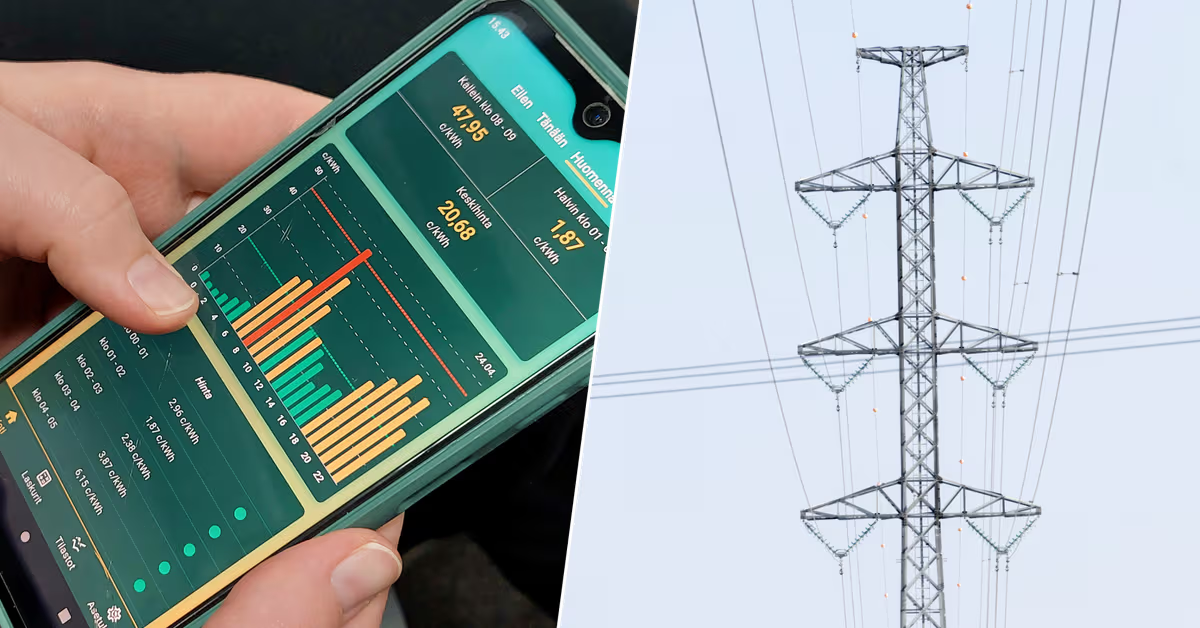
Rising Electricity Costs Loom Over the Nordic Region
As we look ahead to the coming months, a confluence of factors is poised to drive electricity costs higher across the Nordic countries. Low water levels, ongoing conflicts in the Middle East, and corporate acquisitions are all contributing to an uncertain future for consumers.
Experts anticipate more upward pressure on electricity prices this winter, a situation largely stemming from reduced hydropower production in Sweden and Norway. The war in Iran is also contributing to a wider increase in electricity prices across Europe.
“The decline in water reserves in the Nordic region has a direct impact on electricity pricing, especially during periods of low wind power production or particularly cold weather,” explains Pekka Salomaa, director of the Finnish Energy Industry Group.
Additionally, military operations in the Persian Gulf are affecting the availability of natural gas, a crucial energy source that still powers a significant share of Central Europe’s electricity. According to Salomaa, this situation creates ripple effects that extend to the Nordic nations.
On a more localized level, electricity transfer fees may be on the rise in certain areas of Finland, following the acquisition of the electricity distribution company Caruna by the Spanish energy giant Iberdrola. Pertti Järventausta, a professor of electrical engineering at Tampere University, indicated on Yle’s A-studio this week that Iberdrola may increase these fees.
In an effort to adapt to the changing energy landscape, Finland’s Energy Authority implemented a new regulatory model late in 2023, allowing electricity distribution companies to raise transfer fees. This price hike is expected to predominantly affect customers in southwestern and northeastern Finland.
Iberdrola’s recent announcement regarding its intent to purchase Caruna—valued at approximately two billion euros—still awaits approval from European Union authorities. As these developments unfold, consumers across the Nordics will need to prepare for potential shifts in their electricity bills in the months to come.
