

The national stage often draws the lion’s share of media attention regarding cultural policies, with topics such as the cultural canon, public service broadcasting, and film prerequisites currently stealing the spotlight.
In 2024, approximately a third of public cultural funding came directly from the state. Municipalities contributed over half—52 percent—according to a report from the DIK trade union, with the remainder sourced from regional budgets.
Municipal cultural budgets support essential institutions like libraries and cultural schools while also providing physical spaces for artistic endeavors. This leaves plenty of opportunity for local politicians to champion culture in ways that reflect their own priorities.
Leading the Charge
Among the municipalities, Umeå stands out for dedicating the highest proportion of its total budget—4 percent—to cultural initiatives in 2024.
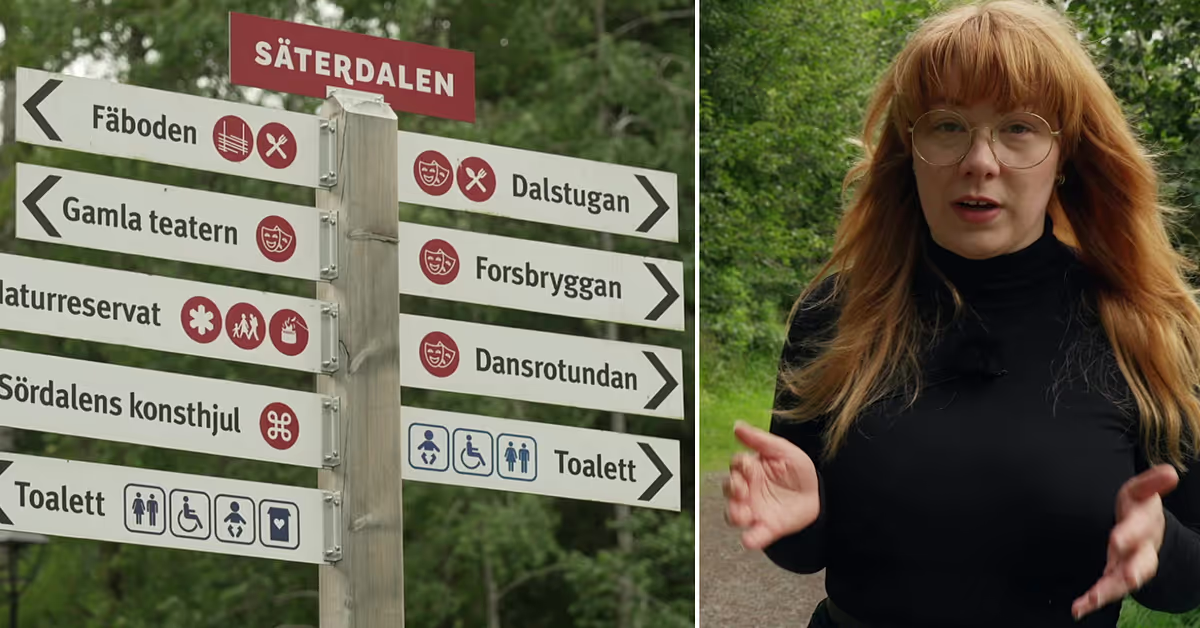
Following closely is Säter, where cultural spending accounts for 3.1 percent, under the guidance of a coalition formed by the Social Democrats, the Centre Party, and the Christian Democrats.
“Even as we face economic constraints, we strive to bolster the cultural budget as much as possible,” states Lennart Götesson (S), the chairman of Säter’s cultural committee.
This commitment, however, has not gone unchallenged by the opposition.
“We are being pressed to make cuts to core services,” counters Caroline Willfox (M), an opposition councilor. “While culture is undoubtedly important, when it comes to priorities such as education and elder care, we must be realistic about our choices.”
Culture on the Sidelines
In stark contrast, Timrå, governed by a coalition of the Moderates and the Social Democrats, finds itself among the municipalities that allocate the smallest share of their budgets to the arts—just 1.1 percent.
“We’re known as a sports-centric municipality, and a significant portion of our funds goes to hockey,” acknowledges Markus Sjöström (M), chairman of the Culture and Technology Committee. “However, it’s crucial that culture also finds its rightful place.”
Committee member Roger Nordén from the local Timrå Party (T) adds, “It’s unfortunate; culture has the power to bring people together, and for many, it’s a vital aspect of life.”
Blending Cultural Responsibilities
A notable number of municipalities across the country lack dedicated cultural committees. Typically, culture is grouped with leisure activities, but the arrangements can vary widely.
Timrå’s intertwined Culture and Technology Committee handles everything from property management to waste and roads, along with cultural oversight.
“I often say ‘from the construction site to the hard hat,’ and it seems to work just fine,” remarks Sjöström.
In contrast, Säter has maintained a distinct cultural committee since the 1970s.
“To merge culture with other responsibilities diminishes its value,” asserts Götesson, emphasizing the importance of treating culture as a priority in its own right.
