

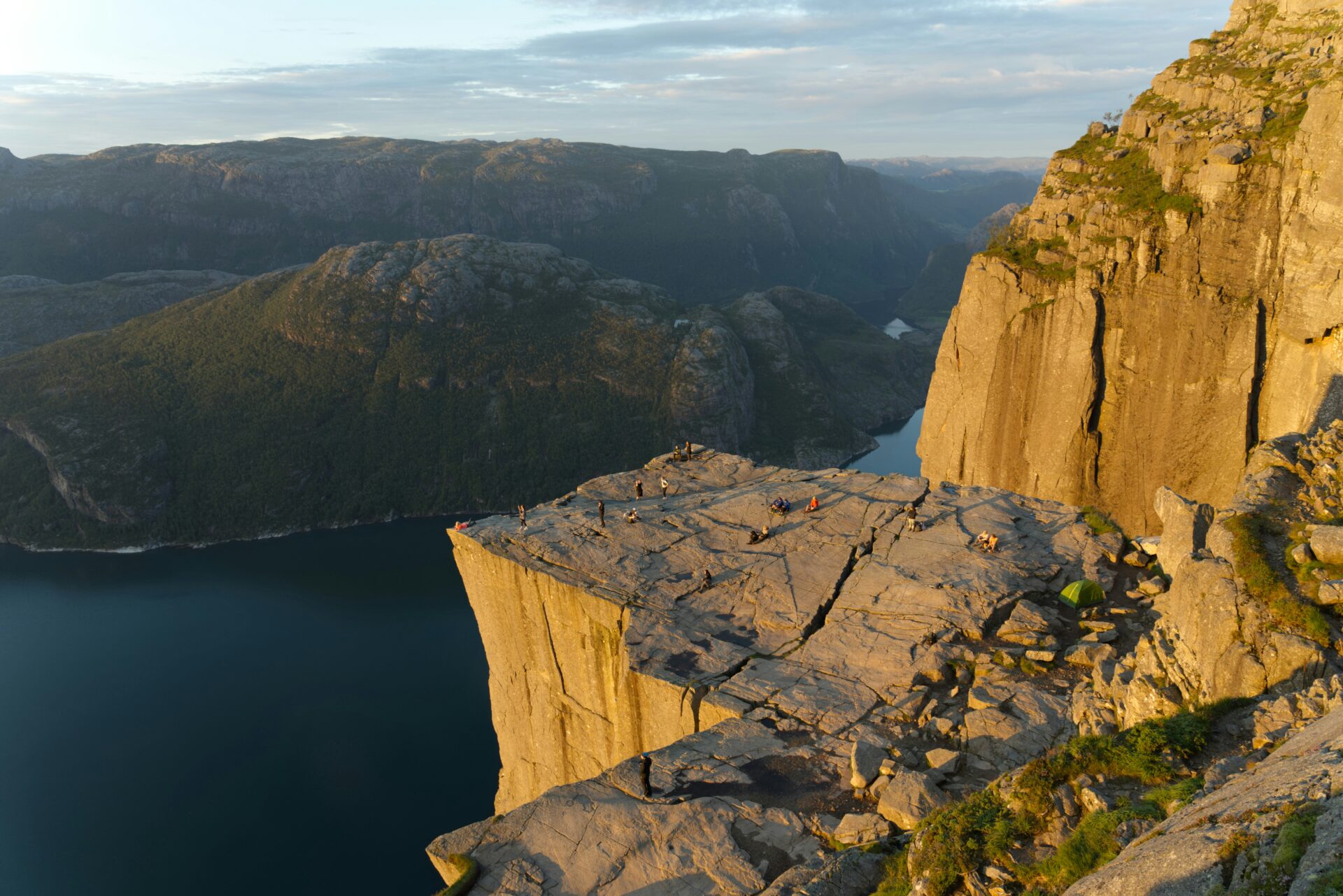
Pulpit Rock, known as Preikestolen in Norwegian, is undeniably one of the most celebrated hiking destinations in Norway— and for good reason. This magnificent cliff soars 604 meters above the breathtaking Lysefjord, offering some of the most stunning vistas found in the southwest region of the country.
Even if the name escapes you, the sight may not—the rock is often captured in photographs depicting hikers joyfully standing at its edge, arms outstretched in triumph after reaching its famous plateau.
You might even recall Tom Cruise’s daring ascent in the climactic battle of Mission Impossible: Fallout. But rest assured, you don’t need to be a Hollywood star to experience this awe-inspiring spot!
Pulpit Rock Hike at a Glance
- Distance: Approximately 8 kilometers round trip
- Duration: About 4 hours
- Elevation Gain: Roughly 500 meters
- Difficulty: Moderate
- Height: 604 meters above Lysefjord
- Trailhead: Preikestolen Parking
- Optimal Time: Summertime for the easiest conditions; accessible year-round with proper preparation
Where is Pulpit Rock?
Nestled in Rogaland in southwest Norway, Pulpit Rock overlooks the picturesque Lysefjord, situated about 40 kilometers east of Stavanger. Its striking flat summit rises almost vertically, presenting a dramatic profile against the water below.
You can hike to this iconic site throughout the year, but the experience can vary widely with the seasons. Summer is the most convenient and popular time to visit, but be prepared for large crowds on sunny days. Winter hikes, while beautiful, require more expertise and appropriate gear, and, in challenging conditions, a guide might be necessary. It’s important to note that this trail draws significant numbers, especially during weekends in the summer.
How Difficult is the Pulpit Rock Hike?
The hike to Pulpit Rock is categorized as moderate. While you need not be a seasoned mountaineer, a reasonable level of fitness and comfort navigating uneven, rocky paths is essential.
Over the course of approximately 8 kilometers, you will gain about 500 meters in elevation, typically taking around four hours for the round trip. If you wish to take breaks and soak in the spectacular views, allow yourself a little extra time.
The Route to Pulpit Rock
The ascent usually unfolds over two hours along a well-marked trail, meandering through forests, marshy ground, rocky landscapes, and notably steep stone staircases—some constructed by skilled Nepalese Sherpas.
The most demanding section generally occurs between the 1.5-kilometer and 2-kilometer marks, where hikers must navigate a steep series of rock steps. Beyond that, the trail undulates gently upward for much of the remaining approximately 4 kilometers each way, offering evolving landscapes as you approach the summit.
Beginning at Preikestolen Parking, adjacent to Preikestolen BaseCamp—complete with basic amenities like restrooms—be sure to take advantage of these facilities before you embark. It’s worth noting that toilet facilities are scarce along the trail and nonexistent at the summit.
Expect serene forest vistas in the hike’s initial stages, and you’ll know you’re near halfway when you encounter shallow ponds with ducks paddling nearby. As you approach the pinnacle, towering granite cliffs will unveil sweeping views of cruise ships navigating the fjord below.
Climbing Pulpit Rock: Essential Tips
Despite the fact that thousands journey this trail annually, don’t underestimate its challenges. Sturdy footwear with good grip is essential, along with extra warm and waterproof layers, plenty of food and water, and a keen awareness of the weather forecast. Conditions can shift dramatically, and wet rocks can pose slippery hazards.
With no barriers along most of the cliff edge, exercise caution near the summit—especially when facing strong winds, rain, or fog.
June, July, and August see the highest visitor numbers, particularly during sunny weekends. To enjoy a more tranquil hike, the Preikestolen organization recommends starting your journey before 8 a.m. or later in the afternoon. The extended daylight during summer makes a late start quite feasible.
Narrow stretches of the path can become congested with hikers, but embracing the spirit of courtesy will keep things moving smoothly. At the summit, patience is key—everyone is eager for their moment at the cliff’s edge, and an informal queue will naturally form. Be gracious—avoid cutting ahead!
Getting to Pulpit Rock
Stavanger serves as the most accessible base for embarking on the Pulpit Rock hike. Thanks to the Ryfast tunnel system, getting to the trailhead has become noticeably easier, removing the need for the old Stavanger–Tau ferry route.
City Ferry and Bus
During peak hiking season, direct bus services operate between Stavanger and Preikestolen Parking. Alternatively, you can take a public bus to Jørpeland and catch a taxi to the trailhead. Be advised that services are limited outside of the main season, so checking connections before you go is wise.
By Car
Driving may very well be the most straightforward option for reaching the site. The route from Stavanger leads through the Ryfast tunnels towards Solbakk and then onto Preikestolen Parking, which is open year-round and currently charges NOK 275 for stays exceeding two hours.
Combine the Hike with a Lysefjord Cruise
For a unique experience, why not view Pulpit Rock from both above and below? Some tours from Stavanger pair the hike with a cruise through Lysefjord, allowing you to gaze up at the legendary cliff from the water before or after conquering the trail yourself.
It’s an extensive day trip, but a fantastic option if you’re pressed for time and wish to explore two of the Stavanger region’s must-see attractions in one excursion.
On a Guided Tour
While hiking Pulpit Rock poses no major challenges during the summer, joining a guided tour can simplify logistics and provide reassurance along the trail.
This guided excursion includes pick-up and drop-off from your accommodation in Stavanger, leading you with an experienced local guide along the main route to the renowned plateau and its breathtaking views over Lysefjord. Depending on the conditions, you may even have the chance to explore a quieter alternative trail.
Transportation takes you through the impressive Ryfast tunnel system beneath the fjord, sparing you the headache of bus schedules, parking, or the drive to the trailhead. Additionally, opting for a guided hike can be exceedingly beneficial outside the bustling summer months, when unpredictable weather, snow, or ice may challenge conditions further.
When is the Best Time to Hike Pulpit Rock?
Summer undoubtedly stands as the prime time for hiking Pulpit Rock. From June through August, expect long days filled with generally favorable trail conditions, though be prepared for sizeable crowds. Late spring and early autumn can offer a quieter atmosphere, though weather can be less predictable.
The pulpit remains accessible year-round, yet winter hiking presents a different set of challenges. With snow and ice frequently covering the path and daylight hours significantly shorter, appropriate winter gear and experience become crucial. If you’re uncertain, consider partaking in a guided winter hike.
Can You Hike Pulpit Rock with Kids?
Many families make the trek to Pulpit Rock, but its suitability largely hinges on your child’s hiking experience rather than their age. The trail features rocky sections and steep inclines, while the plateau itself has exposed edges without barriers. Active kids accustomed to hiking may navigate it successfully, but it’s essential to keep younger children close, particularly near the summit.
What to Do Near Pulpit Rock
Unless you’re merely passing through, you’re likely starting your journey from Stavanger. As one of Norway’s largest cities, Stavanger serves as an excellent hub for discovering both Pulpit Rock and the enchanting Lysefjord.
Stavanger offers an array of attractions for a longer stay, including one of Norway’s oldest and best-preserved medieval cathedrals. Be sure to wander through Gamle Stavanger, or Old Stavanger, with its charming cobblestone streets, 18th-century wooden houses, galleries, and crafts shops.
The city is also home to several noteworthy museums, such as IDDIS, featuring the Norwegian Canning Museum and the Norwegian Printing Museum, along with the Museum of Archeology and the Norwegian Petroleum Museum.
Recommended Tours: Explore Stavanger with a local expert.
Is the Pulpit Rock Hike Worth It?
Without a doubt. Though Pulpit Rock sees a bustling flow of visitors, the moment you gaze down into the Lysefjord from that renowned 604-meter-high vantage point remains truly breathtaking. Come prepared, time your hike thoughtfully, and savor the journey—after all, the stunning scenery along the way is an integral part of the experience.
Have you already traversed the path to Preikestolen or are you planning to hike it soon? Feel free to share your insights or inquiries in the comments section below!
See Also:
8 great hiking tours in Norway
Camping in Norway: the ultimate guide
