

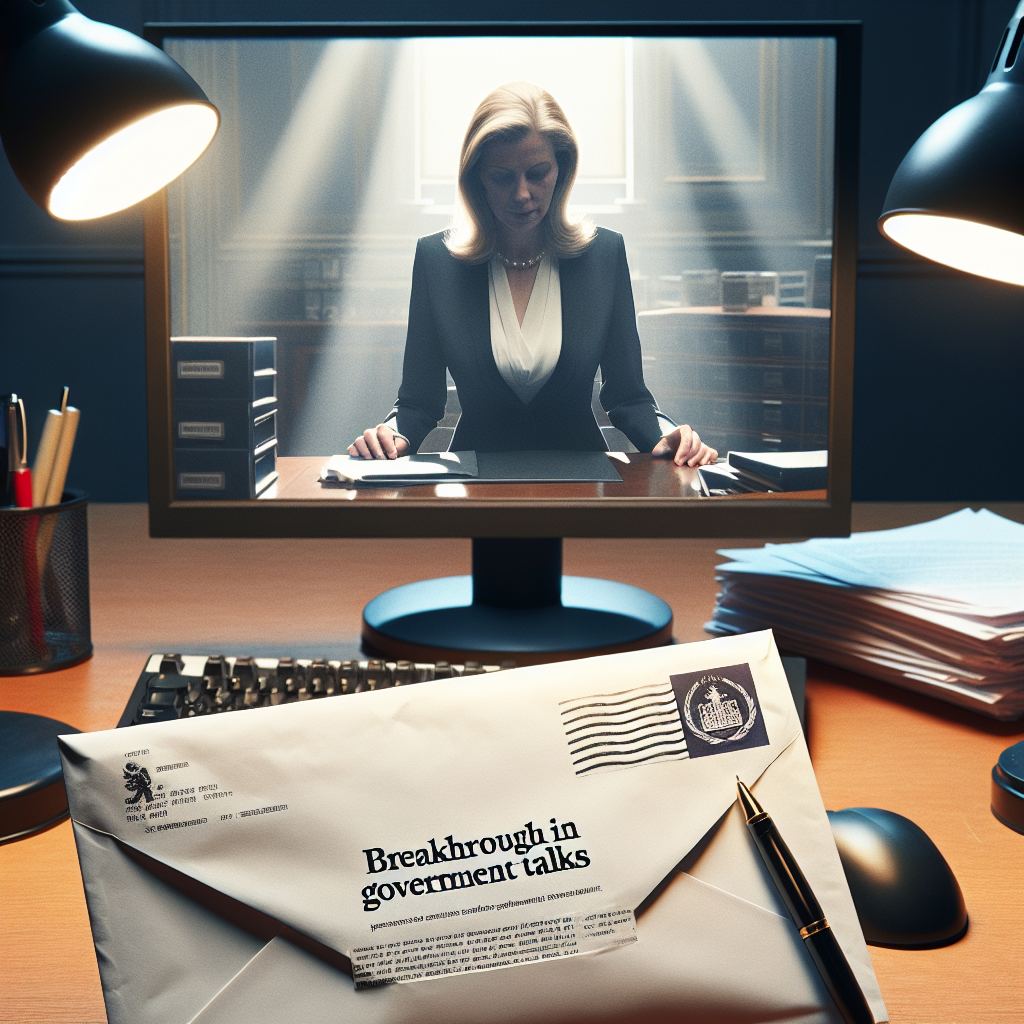
For nearly five weeks, Mette Frederiksen, in her role as royal examiner, has been navigating the intricate process of forming a new government. What appeared from the outside to be a protracted standstill following a convoluted election result – often labeled both muddled and messy – masked a more intense political struggle occurring behind closed doors.
Now, the landscape seems to be shifting toward a potential centre-left coalition, bringing together the Social Democrats, SF, Radicals, and Moderates.
However, this path has not been without its challenges. Lars Løkke Rasmussen, the leader of the Moderates, was forced to issue a decisive ultimatum, temporarily withdrawing from negotiations. Yet, in a surprising twist, he has re-entered the talks. An urgent meeting with the other party leaders, coupled with a carefully crafted exchange of letters with Frederiksen, and a strategic provocation, have all played crucial roles in reigniting the negotiations.
Our narrative picks up three weeks into the discussions, on April 15. On that day, the Social Democrats released a press statement announcing a seminar on artificial intelligence scheduled for the following day at Marienborg, involving all negotiating parties. The announcement hinted at underlying currents of significant import – and indeed, something was afoot.
### The Secret Meeting of Four Party Leaders
On the very same day, unbeknownst to the public and the media, four party leaders convened in secrecy at the Ministry of Foreign Affairs. There, Acting Foreign Minister Lars Løkke Rasmussen held discussions with Martin Lidegaard, the leader of the Radicals, Mona Juul, chair of the Conservatives, and Liberal negotiator Morten Dahlin. The newly appointed chair of the Liberals, Troels Lund Poulsen, participated via video link.
One might wonder why Mette Frederiksen was not involved in this confidential gathering.
In the lead-up to this meeting, both the Liberals and Conservatives had consulted Frederiksen regarding the ongoing government negotiations, only to discover that a crucial welfare settlement related to the rising retirement age had effectively collapsed, as indicated by a memo from the Ministry of Finance. This memo is standard protocol following an election, reviewing all existing agreements and offering an overall assessment.
The sentiment among the leaders gathered around Løkke was one of palpable frustration. The welfare settlement is vital to the Danish economy, and despite its reported failure, a political majority still supports it.
During their meeting, the party leaders strategized a way to secure the survival of the welfare settlement. Their immediate goals focused on convincing Frederiksen to reaffirm it prior to any government formation. In a matter of hours, they crafted a joint letter to her, with Løkke taking the lead as its author.
DR has obtained this letter, which expresses a strong disagreement with the assessment that the welfare settlement had fallen through. It asserts that, regardless of opinions on potential adjustments, the situation becomes untenable without formal acceptance or unconditional reaffirmation of the settlement as a basis for further political dialogue.
In essence, the stakes are high as these party leaders maneuver through the complexities of coalition-building, each step a careful calculation in the quest for stability in Danish politics.
