

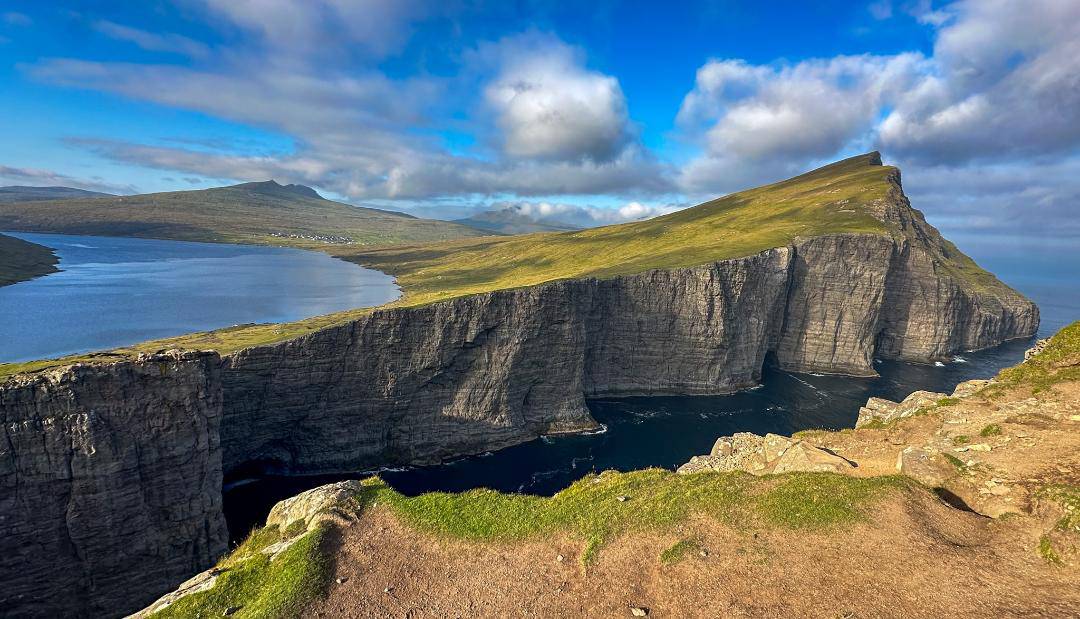
Villingardalsfjall is one of the highest peaks in the Faroe Islands, rising to 841 meters above sea level on Viðoy Island. This challenging but rewarding hike offers sweeping views, dramatic mountain scenery, and a true sense of adventure for those exploring the northern islands.
Where the Hike Begins
The trail starts in the village of Viðareiði, one of the northernmost settlements in the Faroe Islands. From the edge of the village, the route climbs steadily upward, leaving behind farmland and entering increasingly steep mountain terrain.
Viðareiði itself is a beautiful place to begin, surrounded by ocean views and dramatic peaks. The setting gives hikers an early taste of the scenery that will only grow more impressive as the climb continues.
The Route to the Summit
The full hike is about 6 kilometers round trip and usually takes 3 to 4 hours. While the distance is not especially long, the trail climbs directly and steadily, with very few switchbacks. This makes the ascent physically demanding and better suited to hikers with a reasonable level of fitness.
As the trail rises, the ground changes from grassy slopes to rougher, rockier terrain. Blue trail markers help guide the way. The climb is continuous, and the views become more impressive with every step higher.
What Makes Villingardalsfjall Special
One of the highlights of this hike is the sense of scale. From the summit, hikers are rewarded with 360-degree views across the Faroe Islands. On clear days, neighboring islands and dramatic sea cliffs stretch out in every direction.
It is also possible to see Cape Enniberg, one of the highest sea cliffs in the world. This gives the summit an even more dramatic feel and makes the hike especially memorable for visitors looking for one of the best mountain experiences in the Faroe Islands.
Trail Conditions and Difficulty
Villingardalsfjall is generally considered a moderate to difficult hike. The steep gradient, muddy lower slopes, and loose rocks higher up require careful footing. Waterproof hiking boots with good grip are essential.
As with all mountain hikes in the Faroe Islands, weather conditions can change very quickly. Strong winds, fog, and rain can make the trail more difficult and reduce visibility, so checking the forecast beforehand is important.
What to Bring
Hikers should wear layered clothing suitable for changing conditions. A waterproof and windproof outer layer is highly recommended, along with snacks, water, and sturdy footwear. Trekking poles can also be helpful, especially on the descent.
A hiking fee is usually required at the trailhead because the route crosses private land. Visitors should be prepared for this and follow any local access guidelines.
Conclusion
For travelers seeking a more demanding hike in the Faroe Islands, Villingardalsfjall is an outstanding choice. The combination of elevation, dramatic views, and rugged northern scenery makes it one of the most rewarding summit hikes in the archipelago.
