

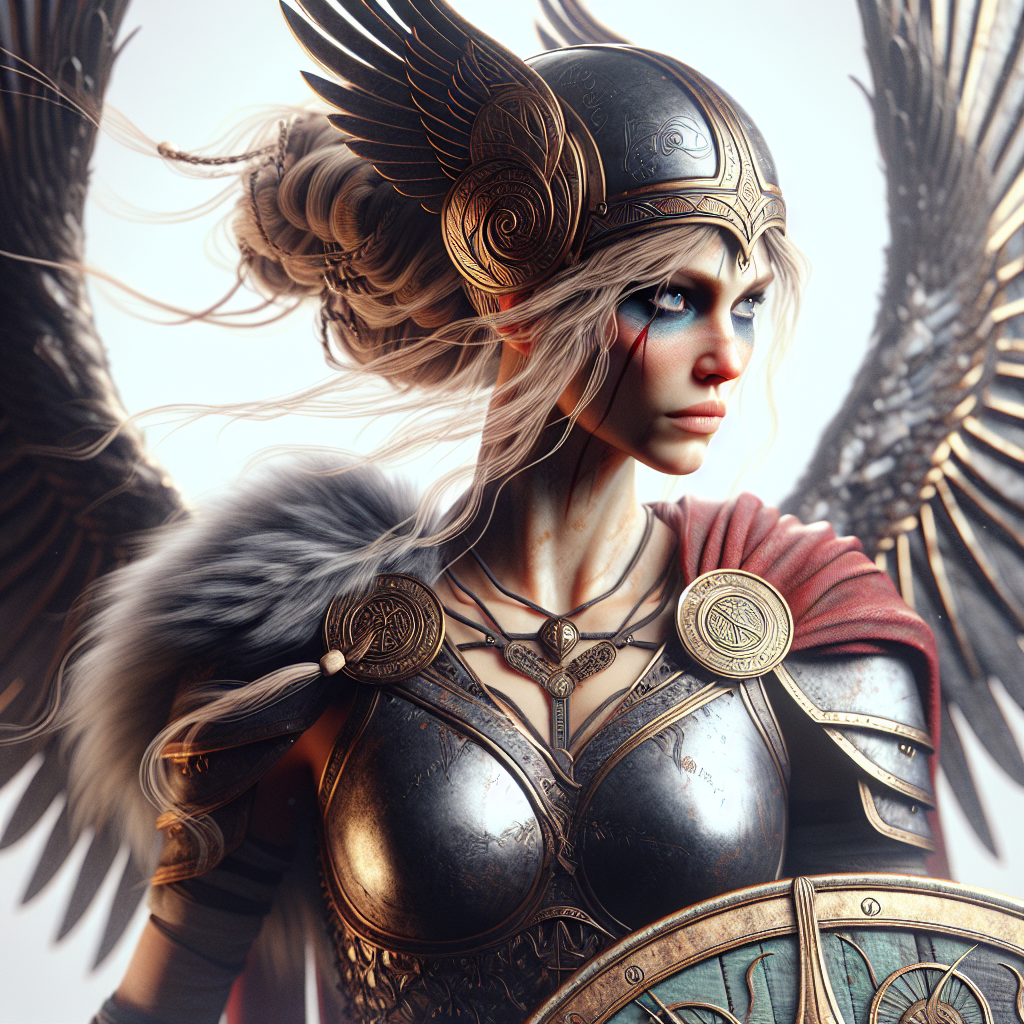
In the rich tapestry of Norse mythology, Valkyries stand out as formidable figures—mighty women entrusted with the solemn duty of deciding the fate of warriors on the battlefield. Yet, amidst their legendary status, there’s another layer of intrigue surrounding what has come to be known as the “Valkyrie symbol.”
Today, the term is frequently bandied about—especially in the realms of tattoos and jewelry. However, unlike many other symbols from Norse tradition, the so-called Valkyrie symbol lacks a single, definitive historical origin.
Instead, the designs most commonly seen today are contemporary interpretations rooted in the lore of Norse mythology. Here, we delve into the essence of Valkyries, the symbols associated with them, and their deeper meanings.
While these designs are widely popular today, they are not authentic relics from the Viking Age but rather modern creations inspired by the ancient narratives.
Who Were the Valkyries?
To understand the Valkyries, we must first explore who they truly were. These mythological women are often depicted as strong and beautiful beings clad in armor, soaring through the skies on horseback above the fray of battle.
The term “Valkyrie” is derived from Old Norse, where it combines the words for “to choose” and “slaughter,” aptly signifying their role as the “choosers of the slain.” Within the realms of Norse mythology, Valkyries selected valiant warriors to be taken from the battlefield—many of whom found a home in Odin’s hall, Valhalla. Yet, it is worth noting that some accounts also attribute a role to the goddess Freyja, who claimed a share of these fallen souls for her own realm, Fólkvangr.
Among the legendary figures associated with the Valkyries is Brynhild, a fierce warrior and the daughter of King Budli. Though often linked to the Valkyries, Freyja herself does not fit the definition, as she is a goddess rather than a Valkyrie. Interestingly, Brynhild serves as the inspiration for the character known as Valkyrie in Marvel’s comic series and films.
Distinguishing Shield Maidens from Valkyries
Often conflated, Shield Maidens and Valkyries inhabit different realms within the mythos. Shield Maidens were human warriors, at least according to legend, while Valkyries are supernatural entities. The crux of the distinction lies in the divine lineage of the Valkyries, who possess formidable powers, in contrast to the human descent of Shield Maidens.
Complicating matters further, Shield Maidens are frequently portrayed as possessing superhuman abilities as well. One of the most renowned Shield Maidens is Lagertha, the wife of the Viking warrior Ragnar Loðbrók.
What Is the Valkyrie Symbol?
Contemporary interpretations of the “Valkyrie symbol” often feature wings flanking a central figure, evoking the image of Valkyries soaring through the skies on horseback. Below these wings, a double or single staff commonly appears. In some variations, the wings encircle the Nordic Knot, known as the Valknut or Odin’s knot, which is frequently associated with themes of death and the afterlife, particularly in connection with Odin. Other designs may incorporate the Helm of Awe at the center, a symbol linked to courage and protection but rooted in later Icelandic magical texts rather than the Viking Age itself.
Traditional renderings do not carry any text, although sometimes phrases drawn from Viking runes accompany the symbol. The Shield Maiden Valkyrie symbol typically resembles the standard Valkyrie symbol, featuring wings, a double staff, and often a Nordic knot nestled in the center.
In contrast to more established symbols like the Valknut or the Helm of Awe, there exists no singular, historically verified “Valkyrie symbol” from the Viking Age, which explains the myriad of designs currently labeled as such.
For a more in-depth exploration of Valkyrie symbols and their meanings, check out our post on Viking tattoos.
The Origins of the Valkyrie Symbol
While the exact origins of the Valkyrie symbol remain shrouded in mystery, it is believed that the wings signify the swiftness with which Valkyries navigate the skies, while Odin’s knot represents the delicate transition between life and death.
What Does the Valkyrie Emblem Represent?
Today, the Valkyrie symbol embodies a range of attributes, prominently courage, physical strength, and the empowerment of women. It is no wonder that these legendary figures enjoy a devoted following, with many choosing to express their admiration through jewelry or tattoos.
Individuals are often drawn to Valkyrie symbols for body art because of their ties to strength, independence, and female empowerment. However, it’s crucial to recognize that most designs are modern interpretations rather than historically authentic Viking symbols.
What Animals Are Associated with Valkyries?
Valkyries are frequently depicted alongside birds, especially in imagery related to battles. Though ravens are predominantly associated with Odin, the chief deity of Norse mythology, they often appear in contexts involving death and combat.
Swans, too, are linked to the Valkyries, who sometimes donned the guise of “swan maidens,” transforming into these graceful birds to soar above. According to legend, if a human man were to steal a Valkyrie’s swan feathers, she would be bound to fall in love with him and marry him.
Additionally, Valkyries are often portrayed riding winged horses, further solidifying their otherworldly connection.
Are Valkyries Good or Evil?
Traditionally, Valkyries symbolize qualities such as bravery, strength, courage, and fairness. Yet, they are also renowned for their fierce combat skills and their decisive role in the selection of warriors destined for Valhalla.
In certain tales, however, Valkyries are depicted with a more sinister edge, using their powers in cunning and malicious ways.
What Symbol Is Worn by Valkyrie in Marvel’s Thor Movies?
For attentive fans of Marvel’s cinematic universe, you might have spotted a compelling symbol inked on Valkyrie’s wrist. This design, however, is not the genuine Valkyrie symbol but rather a stylized reinterpretation, embellished with a trident at the base of the staff.
Distilling Myth from Modern Interpretation
The notion of a “Valkyrie symbol” resonated deeply, yet it’s paramount to distinguish historical fact from modern interpretation. While the Valkyries themselves are firmly rooted in Norse mythology, many contemporary symbols tied to them are artistic creations inspired by these timeless tales.
Have you encountered a Valkyrie symbol or design that captured your imagination? We invite you to share your thoughts in the comments below.
See also:
Where to find Vikings in Sweden
The coolest, craziest Viking hairstyles
Everything you need to know about Viking weddings
