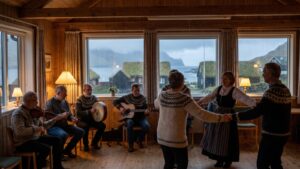
Autumn in the Faroe Islands brings dramatic skies, crisp air and a cultural calendar that rewards curious travellers. From **5 to 11 October 2026**, the archipelago celebrates **Spæl Føroyskt Week**, or Play Faroese Music Week, an initiative dedicated to Faroese musical heritage and contemporary sounds. Traditional *kvæði* ballads, live performances and modern Faroese music offer visitors a distinctive way to understand the islands beyond the landscape.[1]
## What Is Spæl Føroyskt Week?
Spæl Føroyskt Week places local music at the centre of public attention. The programme is associated with the Faroese music community and national broadcasting, while organisers across the islands can create related performances and activities.[1] Because the programme is distributed rather than confined to one large venue, travellers should check the official schedule shortly before arriving and allow flexibility for newly announced events.
Faroese music spans centuries of storytelling. The best-known heritage form is the *kvæði*, a ballad tradition connected with the Faroese chain dance. Contemporary musicians also work across folk, pop, rock, jazz and experimental styles. Experiencing both sides of the programme makes the week especially valuable for first-time visitors.
## What to Expect in the Faroe Islands in October
October is quieter than the summer season and often feels more intimate. Weather can change quickly, with wind and rain appearing between brighter intervals, so visitors should plan around conditions rather than relying on a fixed outdoor timetable.[2] Shorter daylight and lower visitor numbers can create a highly atmospheric setting for cafés, museums, music venues and carefully chosen scenic excursions.
## What to Pack
The official destination guidance recommends preparing for variable weather and using practical layers.[3]
| Essential | Why it matters |
| — | — |
| Wool or thermal base layer | Helps regulate warmth when moving between outdoor conditions and heated venues. |
| Warm mid-layer | A fleece or wool sweater adds insulation without excessive bulk. |
| Waterproof and windproof shell | Rain and strong wind can arrive quickly in the North Atlantic. |
| Waterproof footwear | Useful for wet streets, uneven paths and short outdoor stops. |
| Hat, gloves and scarf | Small accessories provide valuable protection during exposed walks. |
| Small daypack | Keeps an extra layer, water and essential items close while venue-hopping. |
## Getting Around Without a Car
The Faroe Islands’ public transport network combines buses and ferries, connecting Tórshavn with the airport and many towns and islands.[4] A car can offer flexibility, but it is not essential for every itinerary. Travellers should check the current SSL timetable before each journey because seasonal schedules and weather can affect connections.
A practical music-week itinerary might use Tórshavn as a base, leave unhurried transfer time between events and reserve one flexible day for weather-dependent sightseeing. When attending activities outside the capital, confirm the final return connection before departure.
## A Respectful Cultural Experience
Spæl Føroyskt Week is rooted in a living local culture rather than a staged attraction. Visitors can contribute positively by following venue guidance, supporting Faroese performers and businesses, asking before photographing close-up performances and allowing community events to retain their intimate character.
Join local audiences this October, order something warm and let Faroese music become the soundtrack to an autumn journey across the islands.