

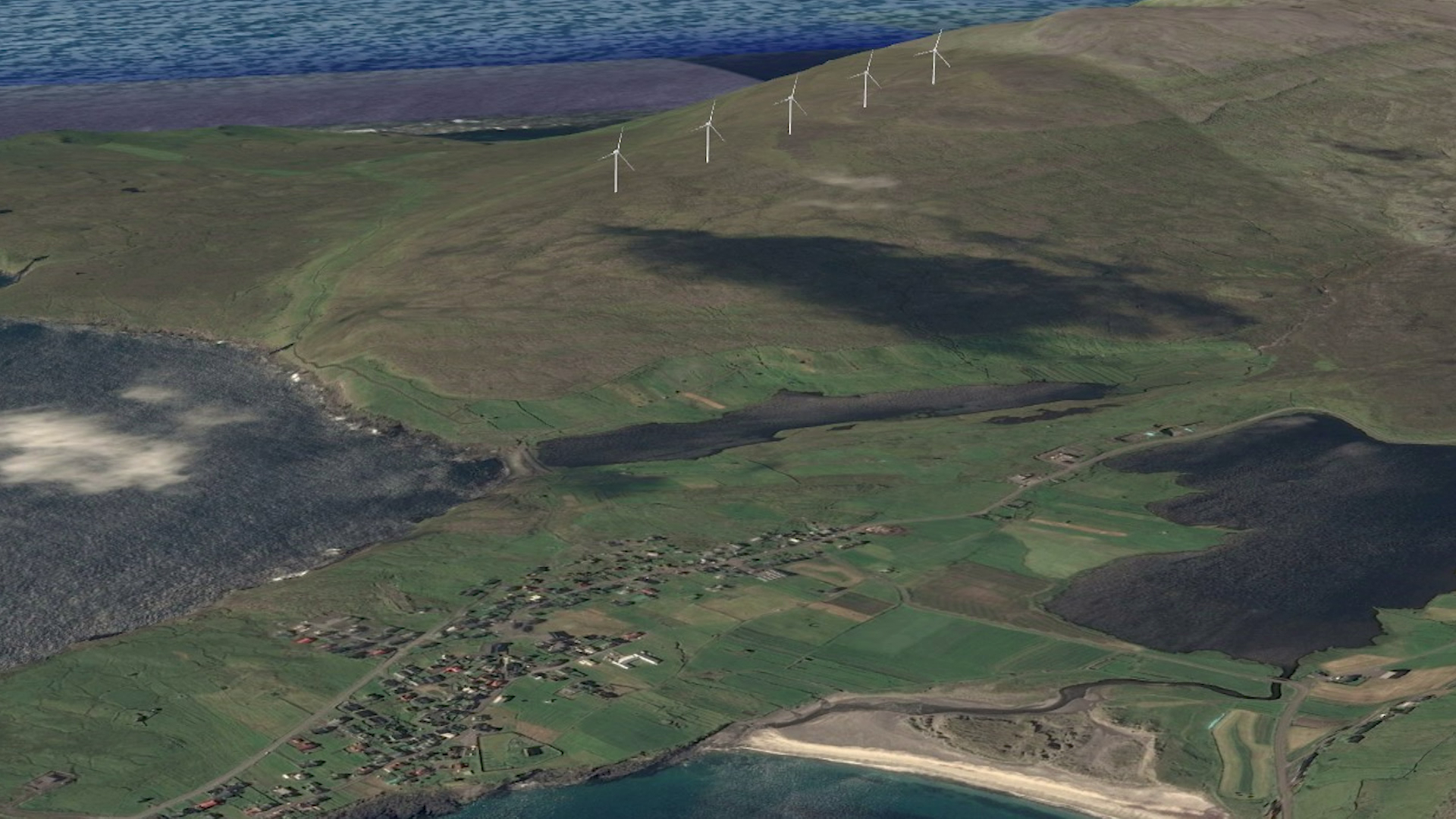
Concerns Grow Over Wind Turbine Project in Klivaløkshagi á Sandi
Residents of Sandur, led by local advocate Festari, have voiced their discontent regarding the environmental approval granted for the wind turbines proposed at Klivaløkshagi á Sandi. Their complaint to the Environment Agency has been met with a firm response, indicating that the agency found no new evidence warranting a reconsideration of the project.
Last September, Vindorka, a small-scale company, secured environmental approval for the wind farm, but just weeks later, appeals began to pour in from concerned citizens. The grievances highlighted several key issues, including the potential for shadowing effects that might compromise the quality of life in Sandur, particularly in Trøðum. Residents also expressed worries about the impact of runoff from access roads on the unique ecosystems of Heyga and Fossamýra, alongside concerns about the environmental implications for local bird populations in Sandsbjørgur.
In addressing the shadowing issue, the Environment Agency asserted that the environmental approval sufficiently mitigates these concerns. Citing technical studies, officials noted that projected shadowing in rural areas would total less than ten hours annually, well within acceptable limits.
Future plans for the wind farm involve relocating the turbines further north within the designated project area. The Environment Agency maintains that this new positioning will not adversely impact residential zones or traffic.
Changes to the access road were also announced; the revised route will follow less visually intrusive land, minimizing disruptions to local wetlands and natural water drainage systems. Despite these adjustments, locals remain apprehensive, particularly regarding the migration patterns of birds navigating the intricate landscape of Sandsbjörg.
The agency’s stance remains that while pollution concerns are addressed in the environmental approval, the effects on avian life fall outside its scope, as they relate to the Electricity Supply Act rather than environmental regulation.
We sought an interview with one of the complainants but were unable to secure comments regarding the agency’s conclusion. While they dispute the agency’s findings, they express a belief that further action may be necessary.
Moreover, community members have urged the Environment Agency to formally protect the areas surrounding Gróthúsvatn and Søltuvík under the emergency protection clause of the Nature Conservation Act, set to take effect on January 1, 2024. They are still awaiting a response to this request.
In the previous year, the Conservation Committee called for an extensive review of bird migration patterns across the region, aimed at ensuring that these vital ecological connections are thoroughly understood and protected.
