

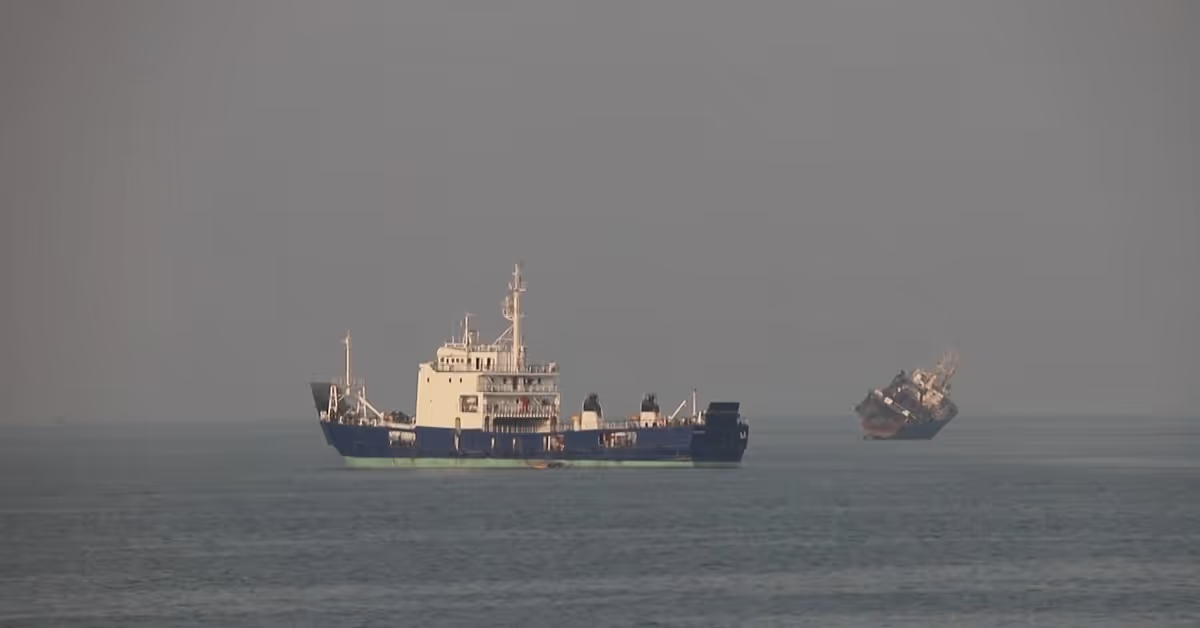
The Strait of Hormuz remains closed, according to a report on Sunday from the Iranian news agency Fars, which cited a military source. This declaration echoes statements made by Iran just the day before, reaffirming that access through this vital waterway is barred.
This assertion stands in stark contrast to the U.S. perspective. Shortly after Iran’s announcement on Saturday, U.S. Central Command promptly countered the claim, insisting that the strait is, in fact, open for navigation. They noted that 55 merchant vessels successfully transited the strait on that very day, as reported by Reuters.
### The Swedish Shipping Company: “The Security Situation Is Still Uncertain”
The swirling uncertainty surrounding the status of the strait is having a palpable impact on shipping firms operating in the region. Swedish company Stena Bulk has acknowledged their ongoing “exposure” in these waters, though they have refrained from disclosing specifics about individual vessels or their numbers.
“The security situation is still uncertain,” remarked Erik Hånell, CEO of Stena Bulk, in a message to SVT. He highlighted the mixed messages emerging from various stakeholders in the maritime and insurance sectors, along with cautious governmental responses. Hånell emphasized that restoring confidence in the safety of shipping operations hinges on a sustainable political agreement aimed at reducing regional tensions. “We are waiting for a clear message,” he added.
To determine whether such an agreement can be reached, all eyes are focusing on Switzerland.
### Countries Meet in Switzerland
On Sunday, a pivotal meeting unfolded in the Alpine nation, bringing together representatives from the U.S. and Iran. United States Vice President JD Vance is in attendance, reportedly aiming to make strides on the issue of a ceasefire in Lebanon—a matter of significant interest to Iran as well.
Details about the negotiations concerning the Strait of Hormuz remain elusive. After the discussions, Vance addressed the press, noting, “While the technical negotiations may not resolve all differences of opinion, they allow us to sit together as a team for the first time in history.”
Sources within the Iranian negotiating team disclosed to Fars that the closure of the strait will continue as long as a ceasefire in Lebanon is not honored. Additionally, they cited another demand from Iran: the issuance of an exemption to allow for the sale of Iranian oil as a condition for reopening the strait.
